
Suspension of Public Funding: Atmosylva Mobilizes Companies for Forests
Reading time: 5 minutes
Since December 23, 2025, the France Nation Verte public forest renewal support program has been suspended due to the absence of a finance law. While over 80% of French forests affected by health crises remain unregenerated and the national carbon sink has been halved in ten years, private funding has become the only immediate solution to continue the urgent adaptation of our forests.
1. Multiple Forest Crises and Abrupt Halt of Public Funding
French Forests Facing Growing Threats
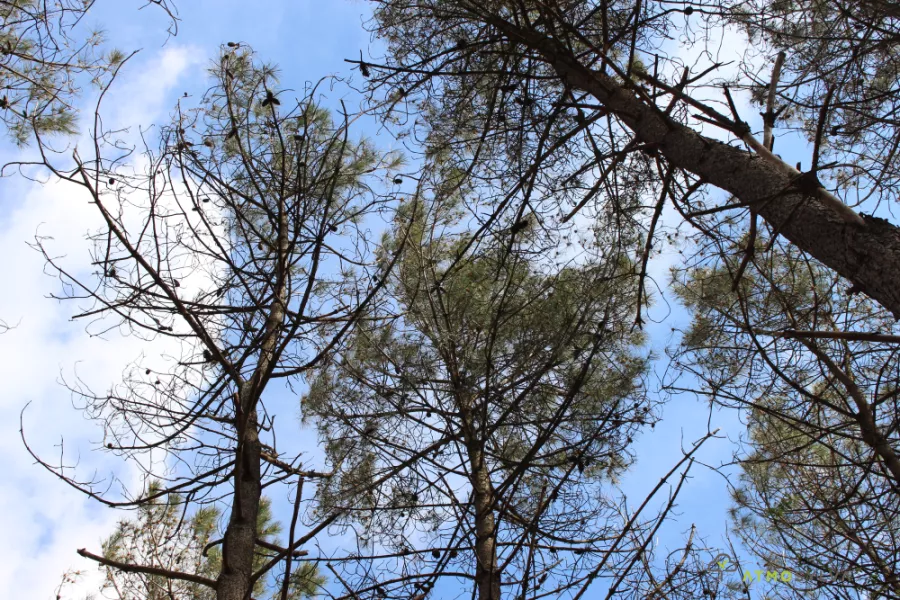
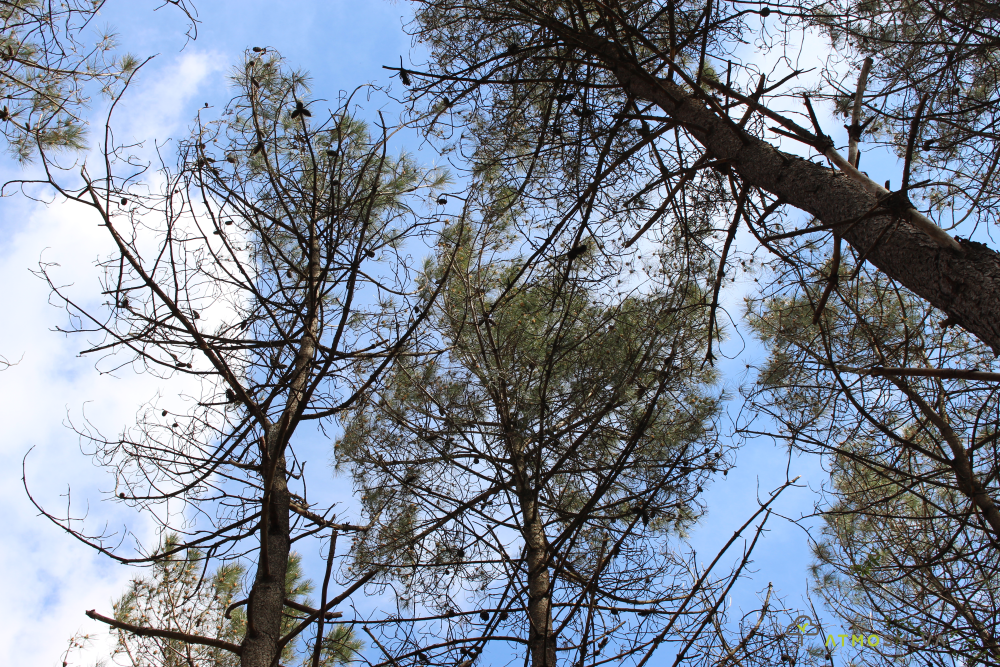
French forests are experiencing multiple and unprecedented attacks. Bark beetles have decimated tens of thousands of hectares of spruce in the Grand-Est region. Repeated droughts are weakening oaks, beeches, and pines across the country. Storms blow down large forest areas. Wildfires are multiplying, including in previously spared regions. Other pests such as processionary caterpillars, bark beetles, or pathogenic fungi are developing, sometimes accelerated by climate change.
According to the I4CE report from July 2025, 110,000 hectares of private forests have been damaged from all causes combined. Despite three successive public plans (France Relance, France 2030, France Nation Verte), only 20% of these areas have been regenerated. The remaining 80% are still waiting to be restored.
The climate consequences are dramatic. CITEPA confirms that the French forest carbon sink has been halved in ten years. Some heavily affected regions have even become net carbon sources. The national target of sequestering 18 million tonnes of CO2 per year by 2030 appears highly compromised.
A Suspension at the Worst Possible Time
On November 5, 2024, the Ministry of Ecological Transition launched France Nation Verte, presented as a "permanent funding window" intended to finance the reconstitution of damaged stands, the adaptation of vulnerable stands, and the improvement of poor-quality stands.
On December 23, 2025, complete suspension. Reason: absence of a finance law. No new applications can be submitted. The official website mentions a hypothetical reopening "if applicable, in the coming months." The I4CE report already anticipated this summer the budgetary risk weighing on forest adaptation in a context of increased public finance constraints.
Private Funding: The Only Operational Alternative
Faced with this suspension, forest owners find themselves without public state solutions while needs remain massive: 1.5 to 1.7 million hectares to be renewed over ten years according to the "Objectif Forêt" report from the Ministry of Agriculture.
Two private funding solutions now coexist:
The Label Bas-Carbone (Low-Carbon Label), a certification scheme led by the Ministry of Ecological Transition, has mobilized approximately 75 million euros since 2019 to reconstitute over 12,000 hectares of forests degraded by bark beetles, fires, storms, droughts, and other severe declines.
Adaptive sponsorship projects, developed by Atmosylva, enable funding of targeted forestry interventions when the situation does not justify complete reconstitution. These projects preserve existing stands and avoid unnecessary clearcuts.
2. Label Bas-Carbone: A Certification with Reinforced Guarantees
A Demanding Decline Criterion
Version 3 of the "Reconstitution" method of the Label Bas-Carbone (September 2025) raised the eligibility threshold to 40% of trees showing at least 50% foliage loss, compared to 20% mortality for public funding. This gap reflects the intention to ensure that only truly doomed stands are reconstituted.
The I4CE report demonstrates that reconstituting a still-growing stand generates a negative climate impact for several decades. The carbon payback time can reach 40 years or more. Conversely, reconstituting a severely declining stand that has stopped storing carbon produces climate benefits from the first years.
Atmosylva was already applying these high thresholds before the reform. Our field diagnostics rely on the DEPERIS method (Forest Health Decline Assessment) to precisely evaluate health status and target only advanced decline situations, regardless of the cause: bark beetles, drought, storm, fire, or other pathogens.
Rigorous Carbon Methodology
V3 incorporates an upward revision of natural regeneration dynamics in baseline scenarios. After a disturbance, pioneer species can spontaneously colonize the area and sequester carbon without intervention. Realistic accounting of this natural forest regrowth ensures that only truly additional sequestration is valued.
This rigor is accompanied by systematic independent verification at 5 years by an accredited auditor. The average price of Label Bas-Carbone forest projects reaches €35/tCO2, ranging up to €45-50/tCO2, compared to €8/tCO2 on the international market according to GERES. This differential reflects a much higher level of requirement and environmental integrity.
3. Atmosylva: Solutions Adapted to Each Forest
Prioritizing No-Regrets Actions
The I4CE analysis identifies "no-regrets actions": reconstituting severely declining stands that have stopped growing and are releasing carbon. These interventions simultaneously enable adaptation (species suited to future climate) and restoration of the carbon sink in the short term.
The report formulates a clear recommendation: prioritize situations of intense decline where renewal benefits both adaptation and climate mitigation. For other situations where the risk of massive carbon loss is not established, improving the existing stand remains the preferred strategy.
Atmosylva offers solutions adapted to each level of decline, avoiding clearcuts when they are not necessary.
A Range of Customized Solutions
Label Bas-Carbone "Reconstitution" Projects
For severely declining forests (>40% foliage loss) requiring complete reconstitution: intense decline from bark beetles, major fires, destructive storms, droughts that have doomed the stand. Demanding certification, independent verification, generation of high-quality carbon credits. In the current context of suspended public funding, the only financing option available for these emergency situations.
Label Bas-Carbone "Afforestation" Projects
Creation of new carbon sinks on agricultural land or wasteland, without destroying existing forest. Increase in national forest area with additional carbon sequestration.
Adaptive Sponsorship Projects (sustainable solution outside LBC)
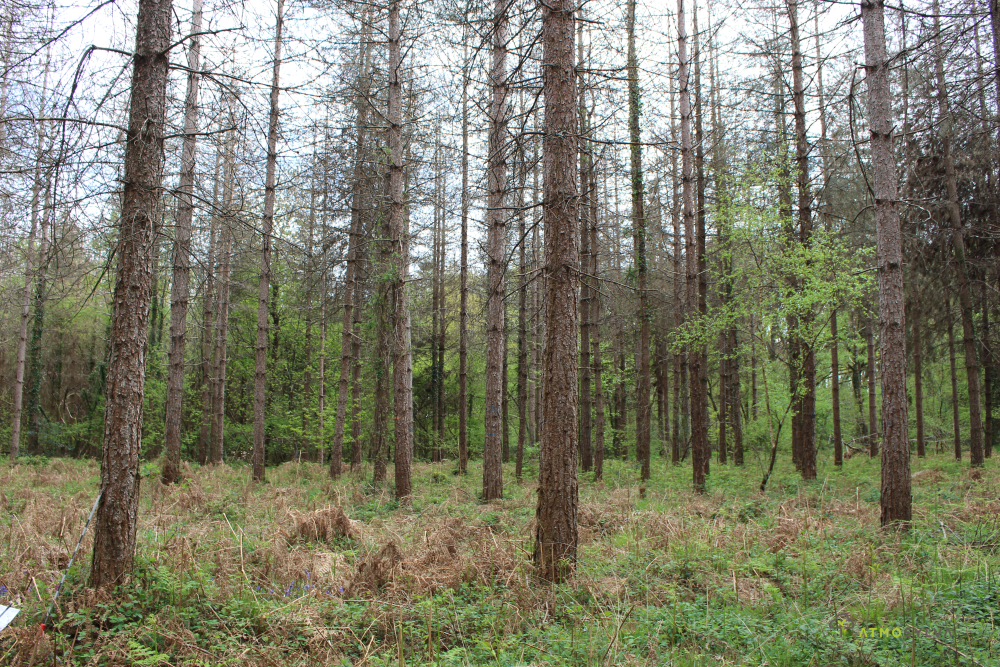
For forests with localized decline not justifying a sanitary clearcut. These situations are common: patches of decline by clusters, partial mortality after drought, affected areas within an overall healthy stand.
Our adaptive approach:
- Targeted reforestation only in actually impacted areas
- Preservation of healthy trees and maintenance of forest cover
- Enrichment planting between existing trees
- Silvicultural work to promote and protect natural regeneration
- Continuous cover mixed-species forestry (CCF)
These projects often constitute the best ecological and climate response. They avoid unnecessary clearcuts, preserve the carbon stock of still-viable trees, maintain cover continuity for biodiversity, and allow progressive forest adaptation.
Funding: Direct contribution from companies, institutions, or individuals wishing to support forest management that respects existing stands, without going through the carbon credit system.
Experimental Projects
Testing different species mixtures, seed origins, and silvicultural pathways, with scientific monitoring of their adaptation to future climate conditions.
Two Complementary Approaches for Two Different Situations
Label Bas-Carbone = Intense decline requiring complete reconstitution (>40% foliage loss). Certified solution, carbon credits, strict methodological framework.
Adaptive Sponsorship = Partial or localized decline allowing preservation of existing stands. Flexible solution, customized, avoiding unnecessary clearcuts, direct funding without carbon certification.
Both approaches address complementary needs and together cover the full range of forest situations, from total decline to targeted interventions.
4. Call to Action: Your Contribution Matters
A Collective Challenge
French forests provide irreplaceable services: carbon sequestration, wood production for a decarbonized economy, water cycle regulation, biodiversity preservation, health and recreation spaces. These functions are threatened by the cumulative impacts of climate change: droughts, storms, fires, pathogens.
The suspension of public funding comes at the worst time. Adaptation needs have never been more urgent, public resources are withdrawing. Mobilization of the private sector and citizens becomes essential.
Who Can Contribute?
Companies and public institutions voluntarily integrating carbon contribution into their climate strategy → Label Bas-Carbone projects
Companies, public institutions, individuals wishing to support adaptive forest management respectful of existing stands → Adaptive sponsorship projects.
Local, Traceable, Verifiable Projects
Label Bas-Carbone projects: All information accessible on the national registry (location, planted species, density, initial diagnosis, schedule, carbon credit volumes). Independent verifications at 5 years ensuring actual plantation success.
Sponsorship projects: Geolocation, complete documentation, regular photographic monitoring, annual progress reports transmitted to contributors.
This total transparency enables precise knowledge of each contribution's impact.
Act Now
Trees planted today will take several decades to reach maturity. Each year of delay in necessary reconstitution is a year lost for adaptation to the 2050-2080 climate and one less year of carbon sequestration.
The suspension of state public funding must not translate into a suspension of action. Atmosylva offers two sustainable private funding solutions: Label Bas-Carbone for situations of intense decline, adaptive sponsorship to preserve existing stands when possible.
Together, let's give French forests the means to navigate the climate crisis, by adapting our interventions to each situation.
Sources
- I4CE, "Financing Forest Renewal," July 2025
- Ministry of Ecological Transition, "France Nation Verte Program," December 2025
- CITEPA, Secten Inventory Report 2023
- Ministry of Agriculture, "Objectif Forêt Report," July 2023