
French Climate Adaptation Hits Budget Wall: The Forest Paradox
When crises pass, budgets disappear
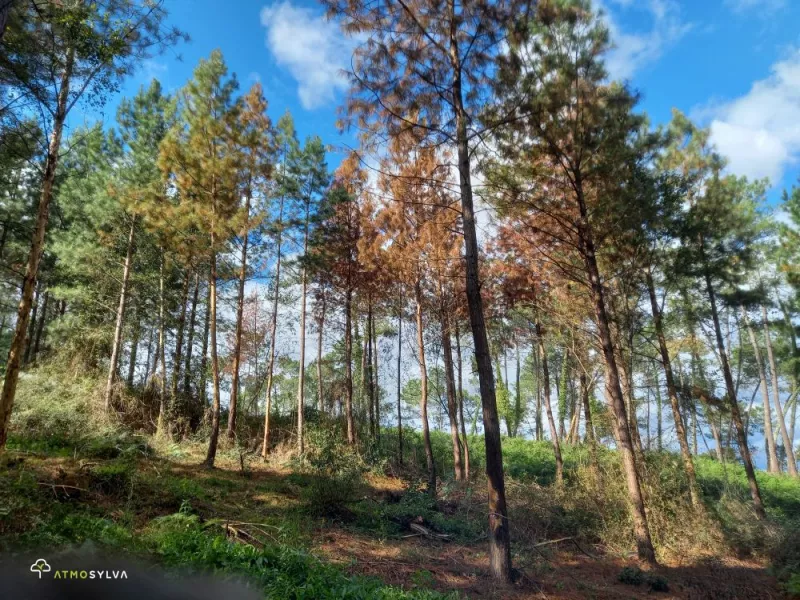
After four years of ramp-up (2020-2024), public funding for climate change adaptation in France is coming to an abrupt halt. This is one of the major findings of the I4CE report published in September 2025, "Adapting France to +4°C: means, needs, financing". And nowhere is this contradiction more visible than in French forest policy.
The paradox is striking: while the National Climate Change Adaptation Plan (PNACC3) multiplies measures and extreme weather events intensify, allocated resources are collapsing. Between the initial 2024 and 2025 budget bills, commitment authorizations were reduced by 50%. The flagship programs of the presidential term – MaPrimeRénov', Green Fund, Water Plan – are frozen or threatened.
French forests: revealing an impasse
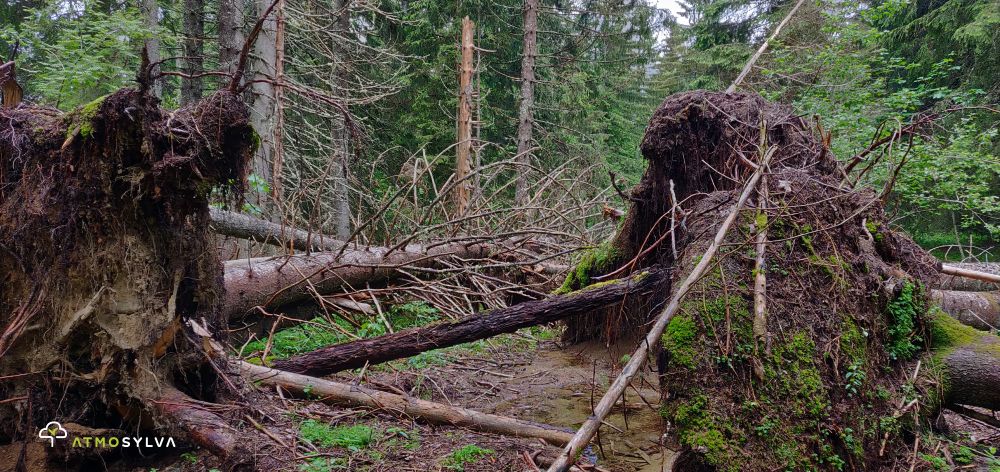
The forest sector perfectly illustrates this impasse. Annual public spending on the forest-wood sector amounts to €1.45 billion, including €816 million in national budget credits. Yet identified needs far exceed these amounts.
According to the Objective Forest report by the Higher Council for Forest and Wood, for already damaged or declining stands alone, intervention would be needed on 1.2 million hectares within 10 years. The estimated cost? Between €3.4 and €4.2 billion over the decade – three times the current budget.
Public operators are suffocating. The National Forestry Office (ONF) faces an "unsustainable financial trajectory" according to the Court of Auditors, which estimates its needs at €350 million in 2027, compared to €285 million in 2023. On the private forest side, the National Center for Forest Property (CNPF) has lost 12% of its staff in twelve years. In the South region, 22 agents must monitor 840,000 hectares and 350,000 owners.
A policy that reacts rather than anticipates
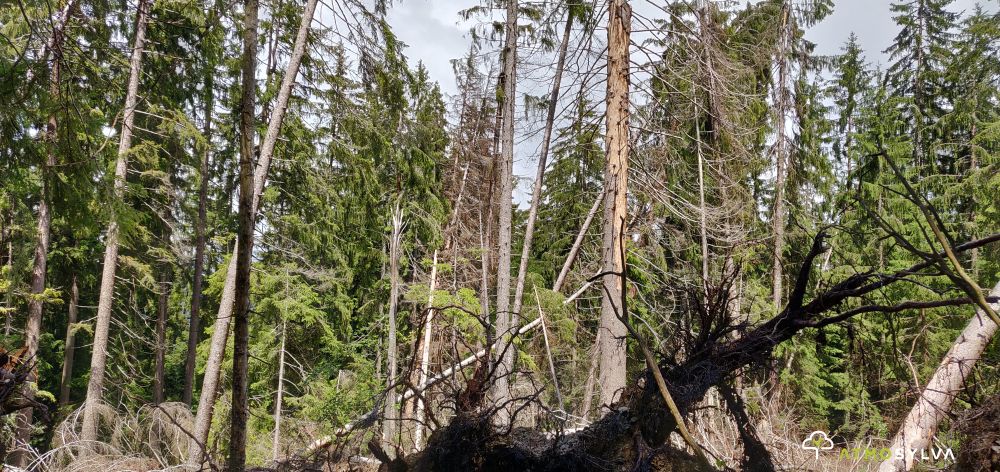
I4CE's analysis reveals a repetitive pattern: resources are released after crises, never before. After the Lothar and Martin storms of 1999, electricity system managers equipped themselves with climate analysis capabilities. The bark beetle outbreak (2018-2020) triggered collective mobilization on forest adaptation. The scorching summer of 2022 gave birth to a €500 million envelope for urban "regreening".
However, the report notes that these crises don't only trigger emergency responses. They "lead to more durable questioning and reassessment of existing systems". The Water Plan, born from the 2022 drought, aims to be a long-term security plan. Reforestation aid no longer concerns only devastated stands but also those considered "vulnerable".
Yet this permanent catch-up logic prevents any real anticipation. As I4CE emphasizes, the PNACC3 nevertheless encourages the development of "anticipation capacity" through prospective studies and better consistency with reference warming trajectories.
Adapting solutions to situations: between debate and pragmatism
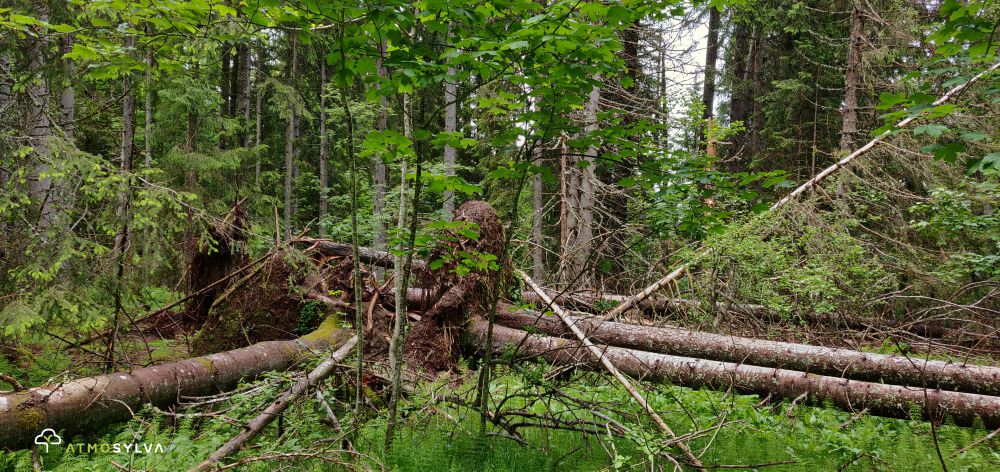
Beyond the numbers, the entire adaptation strategy is debated. The specifications for forest aid have been modified several times and still generate "tensions". Some actors, including France Nature Environnement, warn of the maladaptation risk of full plantations – the most expensive – which involve "heavy work with an irreversible character".
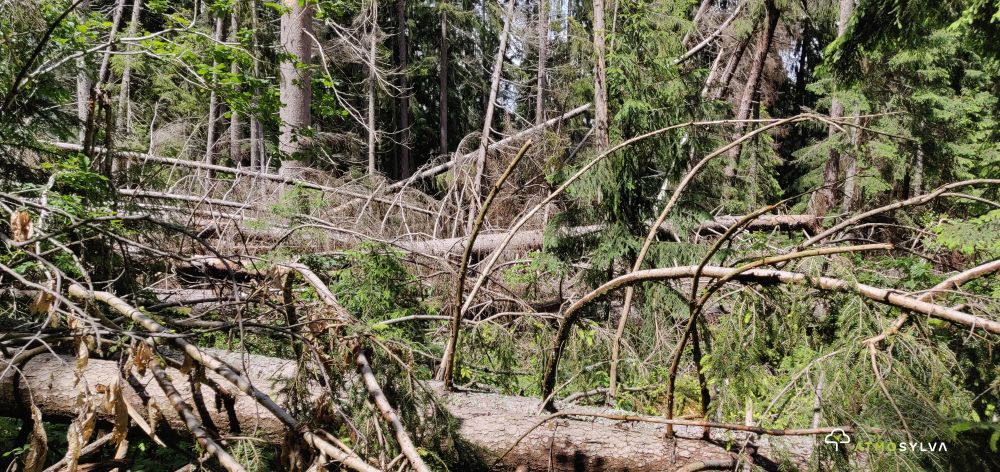
This criticism nevertheless deserves to be nuanced. Full plantations remain necessary in certain cases: forests severely degraded by intense dieback, areas devastated by fires or storms where natural regeneration is compromised. The challenge is not to oppose methods but to adapt the solution to each situation.
This is precisely the differentiated approach developed by actors like Atmosylva, which offers reforestation projects adapted to context: enrichment plantings or under forest cover when dieback remains localized (thus avoiding clear-cutting), experiments to test new species facing climate change, or complete plantations only when the situation requires it.
The Low Carbon Label, the reference for reforestation projects, has moreover considerably strengthened its requirements: strict thresholds for acceptable dieback rates, mandatory species diversification. These safeguards align with practices that Atmosylva already applied in its specifications even before these new rules.
Private financing: an indispensable lever facing public disengagement
Facing chronic and growing insufficiency of public funding, private financing becomes an indispensable lever. The €3.4 to €4.2 billion needed over ten years only concerns stands already in difficulty, without even integrating proactive interventions on "vulnerable" forests that the PNACC3 nevertheless calls for. Public resources alone will not suffice.
Mechanisms like forest project sponsoring enable mobilizing civil society and economic actors to finance ecosystem services provided by forests: carbon storage, biodiversity preservation, water cycle regulation, erosion protection. These services benefit everyone but require investments that the State can no longer assume alone.
This private contribution is not an option but a necessity to support project owners and scale up. It creates a virtuous circle: companies and citizens participate in forest adaptation financing while enhancing their environmental commitment. Forest owners benefit from support to adapt their stands. The community benefits from more resilient forests facing climate change.
The 2026 horizon darkens
The I4CE report leaves no doubt about the trend: "Initial discussions in the context of the 2026 budget preparation do not suggest any short-term improvement."
The signals are worrying. MaPrimeRénov' was frozen during the summer. Financing trajectories contracted with certain operators are being revised downward. Hypotheses of merger or reorganization of operators are circulating, "whose human and technical resources are nevertheless essential".
The suspension of the France Nation Verte program, consequence of the budget vote postponement, symbolizes this impasse. After the momentum of post-Covid recovery, France seems to be renouncing giving itself the means for its adaptation.
The forest case is emblematic: between problem recognition and refusal to invest massively, between willingness to anticipate and perpetual catch-up logic, French adaptation policy navigates by sight. Meanwhile, forests are declining and future bills are accumulating. Mobilizing private financing and civil society is no longer an option but an urgent necessity to complement failing public resources and preserve the ecosystem services on which we all depend.
Article written from the I4CE report (September 2025) "Adapting France to +4°C: means, needs, financing" and sources cited in the document: Senate (Klinger and Lurel, 2024), Higher Council for Forest and Wood (Objective Forest report, 2023), Court of Auditors (2024), France Nature Environnement et al. (2023), French Government (2022-2023).