Reforestation Meymac (19)


Low Carbon Label certified project
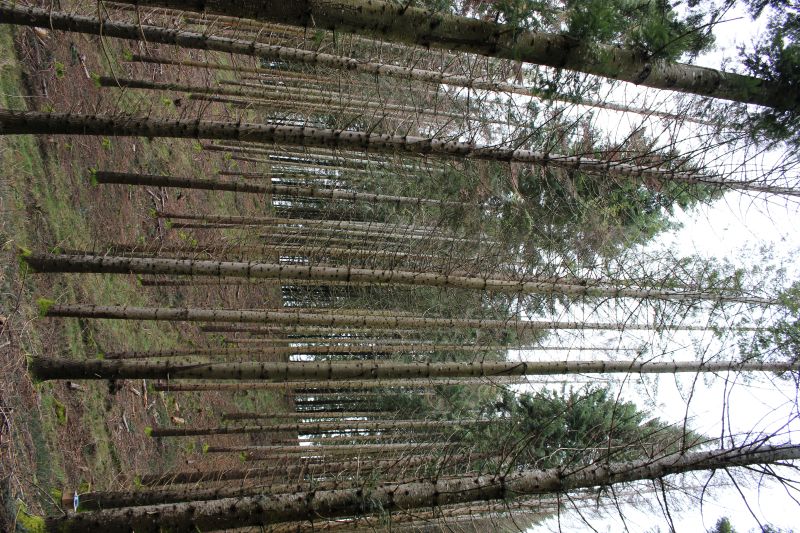
This 4.72-hectare reforestation project aims to restore a forest of dying fir trees on the heights of Meymac. The new plantation combines three species: European larch (55%), Corsican pine (30%) and sycamore maple (15%), allowing for diversification adapted to current climate challenges. Located in the heart of the Millevaches Regional Nature Park in Limousin and part of the Natura 2000 site (Birds Directive) of the Millevaches Plateau, this project is part of an initiative to enhance and preserve an exceptional area.
The plot is located on the upper slope of the Cloup mountain, at an altitude of 923 metres at its highest point, with a gradient of around 20% and a more enclosed central area. Positioned at the head of the watershed, it plays a major hydrological role: runoff feeds the Ambrugeat stream, then the Sèchemaille lake and the Luzège, a priority watercourse in terms of blue infrastructure, before joining the Dordogne 38 km to the south. The forestry choices made – limited soil preparation, conservation of deciduous trees, diversification of species – actively contribute to soil preservation, runoff regulation and the protection of aquatic environments and protected bird habitats.
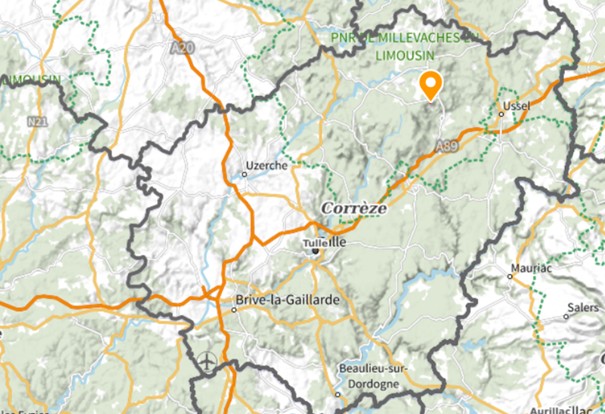
Meymac, Corrèze (19)
4,72 ha planted
European larch, Corsican pine, Sycamore maple
About 7552 trees
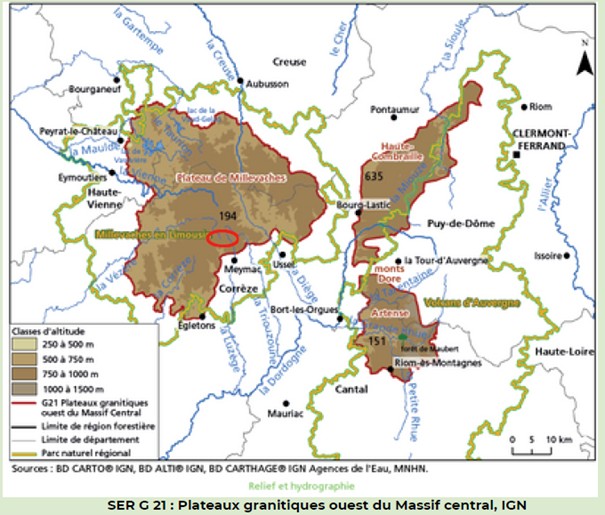
The project is located in Meymac, on the southern foothills of the Millevaches plateau, a veritable ‘water tower’ where many major rivers originate. This area, influenced by both the ocean and the mountains, is characterised by landscapes combining forests (52%) and grasslands/heathlands (38%). The global warming expected by 2050 (+2°C and drier summers) is weakening historic species such as the grandis fir, which is currently in serious decline. Faced with this health crisis, reforestation with suitable species is necessary to maintain forest cover and ensure the continuity of carbon storage.
Part of the Millevaches en Limousin Regional Nature Park and the ‘Plateau de Millevaches’ Natura 2000 site (Birds Directive), the project benefits from a double level of environmental protection. This site of major ornithological interest is home to nesting, wintering and migratory species, as well as rare species such as the European otter, the pearl mussel and the grey shrike. The agro-sylvo-pastoral balance between open and forested areas shapes these unique but fragile landscapes.
The wooded plot is part of an existing sustainable management document, a Simple Management Plan approved by the National Centre for Forest Ownership (CNPF).
The Meymac Project is part of the Low Carbon Label Reforestation method, a certification developed and issued by the Ministry of Ecological Transition (DREAL).
The project is based on planting three complementary species, 70% of which are native. This diversification is a strategic response to climate change and promotes fauna and flora diversity as well as greater forest resilience.
Following the Potential Biodiversity Index (PBI) assessment, a 0.1-hectare area of beech trees was preserved along the roadside to the south of the project. Maintaining this patch of deciduous forest preserves an essential habitat for local wildlife, ensures ecological continuity and enhances the structural diversity of the forest.
Soil preparation was deliberately limited in order to promote better plant establishment by improving aeration, drainage and rooting, while reducing competition from vegetation. This technique limits soil disturbance and soil carbon losses, in line with the aim of respecting the ecological balance of the site.
The project is located within the Natura 2000 site ‘Plateau de Millevaches’, recognised for its major ornithological value since the 1990s. The forestry choices made fully respect the conservation objectives of this site, which is home to nesting, wintering and migratory species.
Measures to promote biodiversity: